
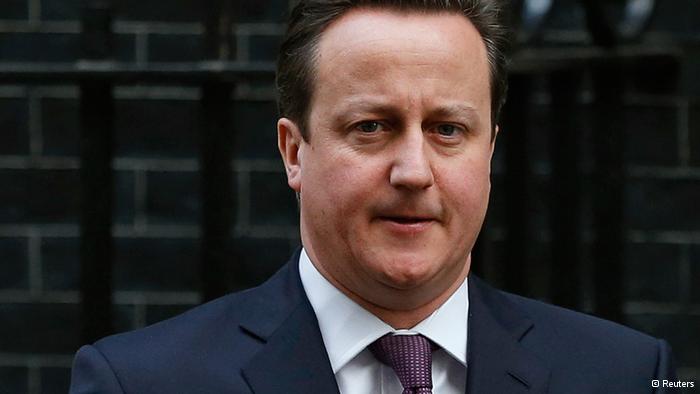
Governors of other E.U. states reacted quickly to David Cameron’s announcement that if his party would be re-elected to lead the House of Commons, he would give his state’s residents a chance to vote yes or no on seceding from the European Union. The result would be decisive, rather than readily replaced by a later referendum. Cameron said the referendum would also be contingent on him not being able to renegotiate his state’s place in the Union. This renegotiation in particular prompted some particularly acute reactions from the governments of other “big states.” Behind these reactions was a sense that the British government was being too selfish. This was not fair, I submit, because the ground of the dispute was on the nature of the E.U. itself as a federal system.
With the basic or underlying difference still intact, it should be no surprise that the renegotiation did not go well. German Foreign Minister Guido Westerwelle said at the time that Britain should not be allowed to “cherry pick” from among the E.U. competencies only those that the state likes. What then should we make of the opt-outs at the time—provisions in which states other than Britain benefitted? Surely one size does not fit all in such a diverse federal union (that goes for the U.S. as well). Westerwelle was saying that Cameron had abused the practice that was meant as an exception rather than the rule. Britain was exploiting this means of flexibility in the Union because that people in that state tended to view the E.U. as a confederation or, worse, a trade "bloc" even though the E.U. and its states each had some governmental sovereignty.
The president of the European Parliament, Martin Schulz, said the approach of the British government would lead to the detriment of the Union. Specifically, he warned of “piecemeal legislation, disintegration and potentially the breakup of the union” if Britain was allowed to be bound only to the E.U. competencies that the party in power in the House of Commons liked. A player joining a baseball team undermine the game even in demanding that he will only bat because that’s the only part that is fun. In higher education, the education itself could only be incomplete if students could limit their classes to what interests them. Such a player or student would essentially have a different view of the sport and education, respectively. The view itself of the nature of the thing was so at odds with the fundamentals of the thing that it would be undercut severely. This is what had been going on in the case of Britain navigating in the E.U.
Carl Bildt, the Swedish foreign minister, also touched on the detriment to the whole from what he erroneously took to be the selfishness of a part. He said that Cameron’s notion of a flexible arrangement for his own state would lead to there being “no Europe at all. Just a mess.” French foreign minister Laurent Fabius said that “Europe a la carte” would introduce dangerous risks for Britain itself. So if the British government was being selfish, it could have been at the state's detriment, though of course I contend that selfishness does not go far enough.
In short, the visceral reactions in other states to Cameron’s announcement manifested recognition of selfishness of one part at the expense of the whole. Those reactions were rash and, even more importantly, lacking in recognition of the underlying fault-line in the Union erupting between Britain and the Union out somewhere in the Channel. Cameron and plenty of other Brits viewed the E.U. simply a series of multilateral treaties in which sovereign states could pursue their respective interests. “What he wants, above all,” according to Deutsche Welle, “is a single market.” Therefore, he “wants to take powers back from Brussels” to return the E.U. to a network of sovereign states. It followed according to this view that each state, being fundamentally sovereign, “should be able to negotiate its level of integration in the EU.” Such would indeed be the case were the E.U. merely a bundle of multilateral international treaties, or a network to which Britain was a party, rather than a federal union of semi-sovereign states and a semi-sovereign federal level. Herein lies the real conflict of ideas within the E.U. Cameron’s strategy is selfish only from the assumption that the E.U. is something more than a network to which Britain happens to belong.
Ultimately the problem was the uneasy co-existence of the two contending conceptions of what the union was in its very essence. The real question was whether the E.U. could long exist with both conceptions being represented by different states. The negative reaction from state officials of other states who held the “modern federal” conception (i.e., dual sovereignty) of the E.U. suggests that ultimately Cameron’s conception of the E.U. was utterly incompatible with the union’s continued viability, given what it actually was at the time.
The president of the European Parliament, Martin Schulz, said the approach of the British government would lead to the detriment of the Union. Specifically, he warned of “piecemeal legislation, disintegration and potentially the breakup of the union” if Britain was allowed to be bound only to the E.U. competencies that the party in power in the House of Commons liked. A player joining a baseball team undermine the game even in demanding that he will only bat because that’s the only part that is fun. In higher education, the education itself could only be incomplete if students could limit their classes to what interests them. Such a player or student would essentially have a different view of the sport and education, respectively. The view itself of the nature of the thing was so at odds with the fundamentals of the thing that it would be undercut severely. This is what had been going on in the case of Britain navigating in the E.U.
Carl Bildt, the Swedish foreign minister, also touched on the detriment to the whole from what he erroneously took to be the selfishness of a part. He said that Cameron’s notion of a flexible arrangement for his own state would lead to there being “no Europe at all. Just a mess.” French foreign minister Laurent Fabius said that “Europe a la carte” would introduce dangerous risks for Britain itself. So if the British government was being selfish, it could have been at the state's detriment, though of course I contend that selfishness does not go far enough.
In short, the visceral reactions in other states to Cameron’s announcement manifested recognition of selfishness of one part at the expense of the whole. Those reactions were rash and, even more importantly, lacking in recognition of the underlying fault-line in the Union erupting between Britain and the Union out somewhere in the Channel. Cameron and plenty of other Brits viewed the E.U. simply a series of multilateral treaties in which sovereign states could pursue their respective interests. “What he wants, above all,” according to Deutsche Welle, “is a single market.” Therefore, he “wants to take powers back from Brussels” to return the E.U. to a network of sovereign states. It followed according to this view that each state, being fundamentally sovereign, “should be able to negotiate its level of integration in the EU.” Such would indeed be the case were the E.U. merely a bundle of multilateral international treaties, or a network to which Britain was a party, rather than a federal union of semi-sovereign states and a semi-sovereign federal level. Herein lies the real conflict of ideas within the E.U. Cameron’s strategy is selfish only from the assumption that the E.U. is something more than a network to which Britain happens to belong.
Ultimately the problem was the uneasy co-existence of the two contending conceptions of what the union was in its very essence. The real question was whether the E.U. could long exist with both conceptions being represented by different states. The negative reaction from state officials of other states who held the “modern federal” conception (i.e., dual sovereignty) of the E.U. suggests that ultimately Cameron’s conception of the E.U. was utterly incompatible with the union’s continued viability, given what it actually was at the time.
Sources:
“Cameron Wants Another EU,” Deutsche Welle, 24 January 2013.
Essays on Two Federal Empires, available at Amazon.
Essays on the E.U. Political Economy, available at Amazon.
Essays on Two Federal Empires, available at Amazon.
Essays on the E.U. Political Economy, available at Amazon.


